IdeaPilot · Planned 2027
From suggestion to shipped improvement.
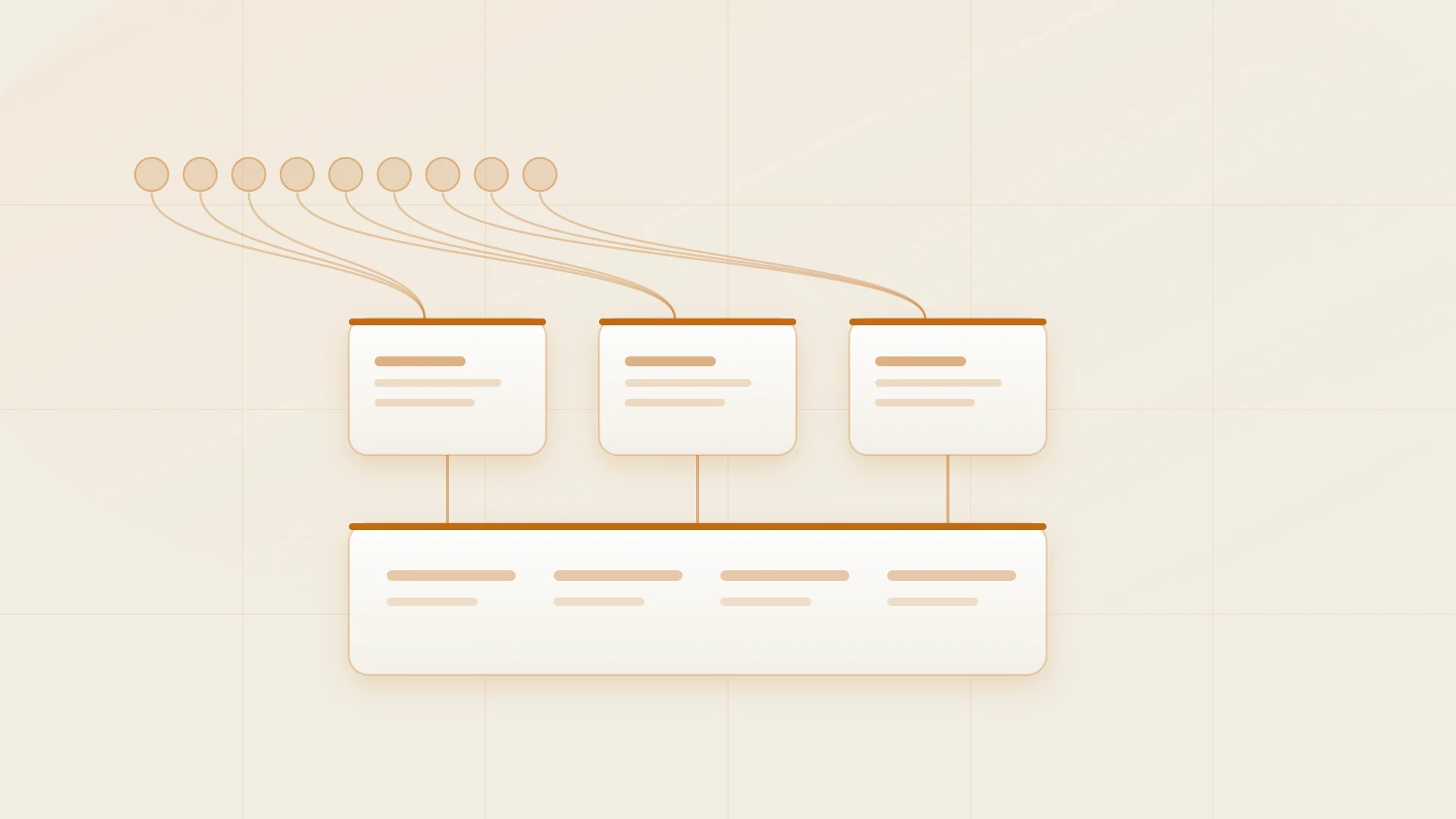
IdeaPilot is a planned process-improvement platform: anyone can raise a manual process or problem, peers rank it on impact and effort, and the strongest ideas become plans that reach the tools where work actually happens.
- Collect
- Rank
- Analyse
- Plan
- Execute
- Stage
- Planned
- Portfolio bay
- Bay 07
- Focus area
- Venture Architecture & Product Design
- Part of
- The Collective Foundry
The problem
Why IdeaPilot exists.
Suggestion boxes collect ideas and lose them. The gap is not willingness — it is the work between a good suggestion and something a management team can approve: the feasibility view, the plan, the estimate, and a route into the tools where delivery actually happens.
Who it's for
Operations, transformation and product teams in organisations where the people closest to a process can see the improvement but have no route to propose it.
The opportunity
The market IdeaPilot is built for.
Idea and innovation management is an established category, with platforms such as HYPE Innovation serving large organisations. Those platforms are strong at collecting and ranking and thin after that. The exception is UiPath Automation Hub, which closes the whole loop to measured ROI — but only for work UiPath can automate, with a cost-benefit model its own documentation scopes to RPA. IdeaPilot is positioned on holding that loop open to any kind of improvement, in whichever delivery tool a team already runs.
The numbers
What the category is worth.
-
Business process management
$18.7B (2026) → $30.3B (2031)
10.1% CAGR
Source: Mordor Intelligence
-
Intelligent process automation
$17.9B (2026) → $37.5B (2031)
16.0% CAGR
Source: Mordor Intelligence
Overlaps the line above. Listed separately and never added - the overlap is most of both.
-
Process mining
$0.85B (2026) → $2.0B (2031)
18.6% CAGR
Source: Mordor Intelligence
Treat with caution: other houses put 2026 at $4.6B to $5.5B, around six times higher. The category boundary is genuinely unsettled.
These categories overlap. They are shown separately as indicators of adjacent economic activity, and are never added together — a sum of overlapping markets does not describe a real opportunity.
Why now
The timing behind it.
- 01
Process knowledge sits with the people doing the work, and most organisations have no route from that knowledge to a funded change.
- 02
Drafting the analysis and the plan — the expensive part of a proposal — is now largely automatable.
- 03
Delivery tools expose the APIs needed to close the loop between an approved idea and the work itself.
What it does
The capabilities inside IdeaPilot.
Collect and prioritise
Anyone submits a process improvement; peers vote and annotate against impact and cost.
Analysis that travels
Feasibility and return views, plus the deck and step-by-step plan a decision actually needs.
Into the delivery tools
Approved initiatives sync to Jira or Linear and are tracked against their original estimate.
A closed loop
Management reviews, authorises and then sees the measured outcome against what was promised.
Where we start
The smallest valuable first step.
- Who it is for first
- Operations and transformation leads in mid-to-large organisations
- The first thing it does
- Process improvements raised by the people doing the work, carried through to a costed business case a management team can approve.
- Likely commercial model
- Per organisation, tiered on active initiatives
- What has to be proven
- That an AI-drafted business case is good enough that a management team acts on it.
What makes it innovative
Why IdeaPilot is different.
Past the vote
Innovation platforms end at ranking. The hard part is the plan that follows, and that is where this starts.
Decision-ready output
An idea leaves as the deck, roadmap and build map a management team needs, not as a paragraph.
Estimate kept honest
The original cost and benefit stay attached, so delivery is measured against the case that funded it.
The usual way
Ideas collected and ranked, then stalled because nobody has time to work them into a proposal.
The foundry way
The strongest ideas arrive as plans, already pointed at the tools where delivery happens.
How it compares
IdeaPilot against the process-intelligence and innovation-management platforms an operations team would already be shown.
Every competitor cell below is drawn from that vendor's own official site on the date shown. Where a capability was not documented there, it is marked Not publicly verified rather than Not available — absence of evidence is not evidence of absence.
| Capability | IdeaPilot Not built — scoped for Wave 1 | Celonis Celonis Platform, enterprise | SAP Signavio Process Transformation Suite, enterprise | UiPath Process Mining with Automation Hub, enterprise | HYPE Innovation Enterprise innovation management platform | Skan AI Process intelligence platform, enterprise |
|---|---|---|---|---|---|---|
| Finding the opportunity Frontline idea and problem intake The people closest to a process can see the improvement. Whether they have a route to propose it is the first question. | Planned Depth 0/5 · target 5/5 Where the venture starts, because it is the one stage that needs no access to a customer’s systems. | Not publicly verified Depth 1/5 Process Copilot is an analyst chat interface; an intake route for staff who are not Celonis users is not documented | Included Shipped Depth 3/5 Collaboration Hub publishes processes to all employees and collects feedback on diagrams with email alerts — feedback on models rather than ranked improvement proposals | Included Shipped Depth 4/5 Automation Hub takes employee-submitted ideas and automations through a mandatory assessment form | Advanced Shipped Depth 5/5 The category reference point: targeted campaigns, structured submission forms, duplicate detection at the point of submission | Not publicly verified Depth 0/5 Observes work rather than asking people; no staff submission route is documented |
| Finding the opportunity Automated discovery from system or desktop data Finds the problems nobody reports. Mature, expensive, and the part of this category that is already solved. | Planned Depth 0/5 · target 2/5 Deliberately low. Celonis, UiPath and Skan each do this as their entire product; the venture begins after discovery, not inside it. | Advanced Shipped Depth 5/5 Process Intelligence Graph over extracted transactional data, with prebuilt process knowledge applied to it | Advanced Shipped Depth 5/5 Process Insights across 2,200+ metrics with external benchmarks; mining across SAP and non-SAP systems | Advanced Shipped Depth 5/5 Process Mining over event logs plus Task Mining at the desktop; native extraction for SAP, Oracle, Salesforce, ServiceNow and Workday | Not publicly verified Depth 0/5 An innovation-management platform: intake is human submission by design, and no automated discovery from system or desktop data is documented | Advanced Shipped Depth 5/5 Computer-vision desktop observation with no APIs or connectors, so it sees the work between systems that event logs miss |
| Turning it into a decision Ranking by impact and effort Separates the ideas worth analysing from the long tail, before anyone spends time on a proposal. | Planned Depth 0/5 · target 4/5 Parity with HYPE rather than leadership. Peer voting against impact and cost is well understood and is not where this wins. | Included Shipped Depth 4/5 Standard process knowledge ranks opportunities; Decision Intelligence simulates impact before the change | Included Shipped Depth 4/5 Improvement areas identified and prioritised against external benchmarks, with targets set from them | Included Shipped Depth 4/5 Automation potential dashboard ranks candidates by estimated cost and time saving, with simulation before change | Advanced Shipped Depth 5/5 Triage, weighted pairwise comparison and scorecard sessions, plus automatic promotion on participant behaviour | Included Shipped Depth 4/5 Per-task automation-fit scores, separated for RPA and cognitive automation, with process variant analysis |
| Turning it into a decision A costed business case a management team can approve The expensive, manual step between a good suggestion and a funded change. | Planned Depth 0/5 · target 5/5 The central claim, and the one that has to be proved: that a drafted case is good enough that a management team acts on it. UiPath already achieves this for RPA ideas. | Included Shipped Depth 4/5 Cross-business impact simulated before implementation; Transformation Hub quantifies it across value stages | Advanced Shipped Depth 5/5 Process Transformation Manager performs value analysis and converts uploaded strategy, operational and financial documents into initiatives with recommendations | Advanced Shipped Depth 5/5 Benefit estimation is mandatory at submission with a documented calculation. Its own docs state the cost-benefit model is specific to RPA automation | Limited Shipped Depth 2/5 Scorecards capture structured criteria, but a costed case carrying a financial return is not documented as an output | Included Shipped Depth 4/5 Baselines current-state metrics and root causes expressly in order to justify transformation ROI |
| Getting it done Stage-gate review, approval and portfolio view Without recorded decisions and owners, an approved idea has no accountable path forward. | Planned Depth 0/5 · target 4/5 Enough to carry a decision, not more. HYPE and UiPath both lead here and matching them is not required to win the rows after it. | Limited Shipped Depth 3/5 Transformation Hub visualises outcomes across processes, objectives and value stages; a stage-gated approval workflow is not documented | Advanced Shipped Depth 5/5 Process Transformation Manager is positioned as the control centre for transformation initiatives | Advanced Shipped Depth 5/5 Automation Pipeline with business review, technical review, rework, implementation and live phases | Advanced Shipped Depth 5/5 No-code phase gates and business rules, routing by topic, location or category, decisions recorded with reasons, owners and deadlines | Not publicly verified Depth 1/5 Discovery and analysis are documented in depth; an approval or portfolio workflow is not |
| Getting it done Handoff into the delivery tools a team already uses Where most of this category stops. An approved initiative that never reaches a tracker is a document. | Planned Depth 0/5 · target 5/5 Into whichever tracker a team already runs, rather than into a delivery mechanism the platform itself owns. That distinction is the whole argument against UiPath here. | Included Shipped Depth 4/5 Action Flows reach Jira, ServiceNow and Slack across 100+ connectors. The dedicated Jira connector docs are Skills-era, and Skills is maintenance-only since August 2025 | Not publicly verified Depth 2/5 Initiatives are managed inside the suite; a documented sync into an external delivery tracker was not found | Advanced Shipped Depth 5/5 Ideas move through the pipeline into implementation and link to their Orchestrator package — but the destination is UiPath’s own automation stack | Limited Shipped Depth 3/5 Owners, deadlines and a Kanban board inside the platform; integration into external delivery tools is not documented | Not publicly verified Depth 1/5 Opportunities are handed to an automation programme; a documented route into a delivery tracker was not found |
| Proving it worked Measured outcome against the estimate that funded it The difference between a programme that compounds credibility and one that spends it. | Planned Depth 0/5 · target 5/5 The original cost and benefit stay attached to the delivered work rather than stored separately. Parity with UiPath, extended to improvements it cannot execute. | Included Shipped Depth 4/5 Transformation Hub is the stated place for quantifying realised impact, with monitoring after go-live | Included Shipped Depth 4/5 Value analysis within Process Transformation Manager; realised-against-estimated reporting is not documented in detail | Advanced Shipped Depth 5/5 Execution Assessment links a live idea to its Orchestrator package, and Insights compares actual savings against the target from the original assessment | Limited Shipped Depth 2/5 Campaign KPIs cover participation, processing time and implementation rate — programme health rather than financial benefit against an estimate | Included Shipped Depth 4/5 Pre- and post-automation KPI validation against an observed baseline rather than a self-reported one |
| Who can actually use it Any kind of improvement, not one delivery mechanism Decides whether the loop holds for a policy or staffing change, or only for work the platform itself can execute. | Planned Depth 0/5 · target 5/5 The real differentiator once UiPath is read closely: the loop has to hold for a policy or staffing change, not only for work the platform can automate. | Limited Shipped Depth 3/5 Any process it holds data for, but framed throughout around process execution and automation | Included Shipped Depth 4/5 Any initiative can be managed, though the analysis underneath depends on process and ERP data | Limited Shipped Depth 2/5 Deep but narrow: the documented cost-benefit model is specific to RPA automation and is stated as not applicable to agentic AI opportunities | Advanced Shipped Depth 5/5 Genuinely open to any idea on any subject. That breadth is the strength of the category, and the reason its later stages stay thin | Limited Shipped Depth 2/5 Scoped to desktop-observable work and its automation |
| Who can actually use it Time and cost to a first result What puts this category out of reach for most mid-market organisations today. | Planned Depth 0/5 · target 4/5 Starting with submitted ideas needs no data access and no extraction project, which is what makes a mid-market first result plausible at all. | Not publicly verified Depth 2/5 Faster value realisation is claimed via the PI Graph, but it still rests on extracting transactional data; no pricing or time to first result is published | Included Shipped Depth 3/5 “Plug and Gain” gives ECC and S/4HANA customers a fast start — conditional on already being an SAP customer | Not publicly verified Depth 2/5 Automation Hub itself is light to stand up, but the loop assumes an existing UiPath automation programme; no pricing is published | Not publicly verified Depth 2/5 A campaign needs no systems integration, but pricing and implementation effort are not published | Included Shipped Depth 4/5 Discovery stated as completing in weeks with no IT integration. Desktop observation raises employee-monitoring and works-council questions in some jurisdictions |
Who each tool is actually best for
- IdeaPilot Not built — scoped for Wave 1
Not a buying option. Every row is target specification at an achieved depth of zero. The intended buyer is an operations or transformation lead in a mid-to-large organisation who cannot justify an enterprise process-mining programme but has more improvement ideas than capacity to work them up.
- Celonis Celonis Platform, enterprise
Large enterprises that can fund a data-extraction programme and want one process model behind opportunity ranking, automation and value tracking.
Source: Celonis Platform — Process Intelligence Graph, Action Flows, Transformation Hub , Process Intelligence Graph — prebuilt process knowledge and prioritised opportunities , Action Flow inputs — Jira, Slack and ServiceNow modules in the mapping panel , Jira Cloud (Skills) — create-issue fields; Skills unsaleable from August 2025 and maintenance-only
- SAP Signavio Process Transformation Suite, enterprise
SAP customers. "Plug and Gain" turns an existing ECC or S/4HANA estate into process analysis quickly, and Process Transformation Manager then runs the initiatives that come out of it.
Source: Process Transformation Suite — analysis and mining, modelling, transformation management, AI , Process Transformation Manager — control centre for initiatives, benchmarking and value analysis , Process Collaboration Hub — central entry point, publishing and feedback on diagrams , February 2025 release — Process Insights across 2,200+ metrics with external benchmarks
- UiPath Process Mining with Automation Hub, enterprise
Organisations running a UiPath automation programme. For automation ideas specifically, this is the most complete loop on the market today — submission, assessment, review, implementation and measured ROI, all documented.
Source: Process Mining — automation potential ranked by cost and time saving, with simulation , Automation Hub — Citizen Developer Assessment: mandatory volume, duration, error and rework inputs , Automation Hub — idea review phases and Automation Pipeline stages , Insights — Automation Hub ROI data model: actual savings against assessment targets
- HYPE Innovation Enterprise innovation management platform
Organisations whose first problem is getting ideas out of their workforce at all. Campaign design, structured submission and evaluation are the deepest in this shortlist and genuinely subject-agnostic.
Source: Idea Management — targeted campaigns and structured submissions , How HYPE works — no-code phase gates, business rules, routing, owners and deadlines , Evaluation tools — triage, weighted pairwise comparison, scorecard sessions, Community Graduation , Enterprise AI — similarity search at submission, AI pre-evaluation, campaign assistant
- Skan AI Process intelligence platform, enterprise
Teams that need to see work happening between systems — Excel, email, mainframes — without an integration project. The fastest documented route in this shortlist from kickoff to a quantified baseline.
Source: Process discovery and analysis — computer-vision observation, no APIs or connectors , Automation discovery — per-task automation-fit scoring for RPA and cognitive automation , Process discovery in weeks with zero IT integration , Buyer’s guide — baselining current state and validating post-automation metrics
How this comparison is made
- Comparative claims follow ACCC guidance: they must be accurate, fair and supportable on reasonable grounds, judged on the overall impression rather than line by line.
- A competitor capability is only marked as present where its official site or documentation describes it. Where it was not documented the status is “Not publicly verified” — not “Not available”. This is a desk review of published material, not a hands-on benchmark.
- Two categories are compared together on purpose, because a buyer with this problem is shown both: process intelligence (Celonis, SAP Signavio, UiPath, Skan AI), which is strong at finding opportunities, and innovation management (HYPE), which is strong at collecting them from people. Neither category is weak — they are strong at opposite ends of the same pipeline.
- UiPath Automation Hub already closes the loop this venture was positioned against: submission, mandatory benefit assessment, staged review, implementation and actual-versus-target ROI, all documented. It scores 5/5 on four rows IdeaPilot intended to lead on. The difference the evidence does support is scope — UiPath’s own documentation states its cost-benefit model is specific to RPA automation, so an improvement that resolves to a policy, staffing or vendor change has nowhere to go in it.
- Depth scores (0–5) are our own analytical assessment of how deep a capability runs. They are not vendor-published figures, and they are separate from the evidence status beside them.
- IdeaPilot is not built. Every one of its cells shows delivery “Planned” and an achieved depth of zero. A target beside it is the specification being built toward, never a claim about today.
- Targets are published only for our own column and only with a stated reason. Two are deliberately below the leader: process discovery, which Celonis, UiPath and Skan each do as their entire product, and governance, where HYPE and UiPath both lead and matching them is not required to win the rows after it.
The approach
How we build it.
IdeaPilot is a planned innovation workflow where anyone in a company can submit a manual process or a problem and propose an improvement. Peers vote and comment, ranking ideas by impact and cost.
The strongest ideas are then worked up into something a management team can act on: a feasibility and return view, a presentation, an implementation roadmap and a build map.
Approved initiatives sync into the delivery tools a team already uses, so the loop from suggestion to measured outcome stays closed.
The outcome
What changes when it's in place.
- The people closest to a process have a route to change it.
- Approved ideas arrive as plans, not paragraphs.
- Outcomes are measured against the estimate that justified them.
What could go wrong
The risks, named.
-
UiPath Automation Hub already runs this entire loop — submission, costed assessment, staged approval, delivery and actual-versus-target ROI — and Celonis, SAP Signavio and Skan AI are far more mature at discovery.
Concede discovery outright rather than recreating it. Against UiPath the difference is scope, not novelty: its benefit model is documented as specific to RPA automation, so an improvement that resolves to a policy, staffing or vendor change has nowhere to go in it.
-
Enterprises must share process and systems data for the platform to be useful at all.
Earn it in stages: begin with ideas people submit themselves, which needs no data access.
-
Benefit tracking only works if someone keeps the estimate honest after delivery.
Attach the original cost and benefit to the delivered work rather than storing it separately.
The open questions
What would need to be true.
-
Enterprises will trust the platform with process information.
How we would know: Track how many proceed past submitted ideas to connected process data.
-
AI-generated business cases are materially useful, not merely plausible.
How we would know: Measure the approval rate of generated cases against hand-written ones.
-
The platform solves more than idea collection.
How we would know: Measure how many approved ideas reach delivery and a measured outcome.
A scenario
What this could become.
$20M–$35M
at $5M ARR, on 4–7× ARR
A scenario, not a valuation, a forecast or an offer. It states what the venture might be worth IF it reached the revenue shown, at multiples other private SaaS businesses have transacted at. Nothing here has revenue today.
Published private-SaaS transaction benchmarks, checked 2026-10-12: private deals broadly transact at 2–7× ARR, with medians around 3–5×. These come from advisory firms and marketplaces rather than audited transaction data.
How it fits the foundry
A venture, not a department.
IdeaPilot moves through the whole foundry — discovery, design, engineering, quality and launch — like every venture we build. It's most visible in Venture Architecture & Product Design, where its business purpose is sharpest.
- Discover
- Define
- Design
- Build
- Assure
- Launch
- Learn
- Scale